

Dry Scalp vs Dandruff: How to Tell the Difference
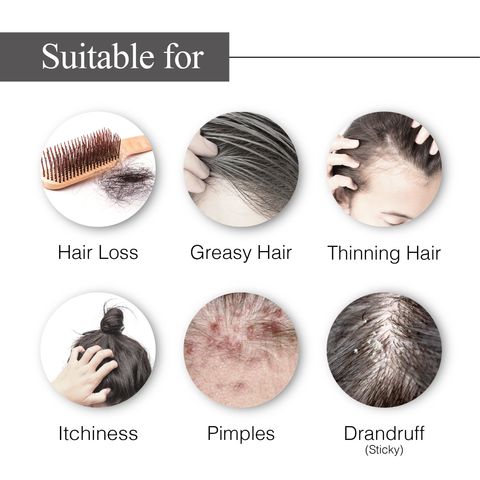
Dandruff Scalp is a common concern, but not all dandruff are the same. Some flakes come from a dry scalp, while others are more commonly linked with oily scalp and dandruff.
The easiest way to understand the difference is by looking at the flake texture.
Dry scalp usually creates fine, powder-like flakes. These flakes are small, white, dry, and may fall easily onto the shoulder.
Oily dandruff usually appears as larger flakes or patches. These flakes may look oily, slightly yellowish-white, and may stick to the scalp or hair roots.
Understanding the difference can help you choose a scalp care routine that supports your scalp more gently and effectively.
What Is Dry Scalp?
Answer Box:
Dry scalp happens when the scalp lacks moisture or feels tight and sensitive. It often creates fine, powder-like white flakes that fall easily from the scalp. Dry scalp flakes are usually light, loose, and dry, instead of oily or sticky.
Dry scalp is usually related to scalp dryness, sensitivity, or barrier imbalance. The scalp may feel tight after washing, especially if the shampoo is too strong or if you wash too often.
Dry scalp flakes are usually not thick or oily. They often look like fine white powder on the hair, scalp, or shoulder.
Common signs of Dry Scalp
| Sign | What You May Notice |
|---|---|
Flake texture |
Fine and powder-like |
Flake size |
Small flakes |
Flake colour |
Usually white |
Flake feel |
Dry, light, and loose |
Scalp feeling |
Tight, dry, or sensitive |
Flake behaviour |
Falls easily onto shoulder |
What dry scalp flakes look like
Dry scalp flakes usually look like:
- Small white powder
- Fine dry particles
- Loose flakes that fall easily
- Light flakes on the shoulder
- Dry flakes around the hairline or parting
The scalp may also feel uncomfortable, tight, or slightly itchy, especially after shampooing.
What Causes Dry Scalp?
Dry scalp may happen when the scalp loses moisture or becomes sensitive to certain triggers.
Common causes include:
- Over-washing
- Harsh shampoo
- Hot water washing
- Dry air-conditioned environments
- Frequent colouring, relaxing, or chemical services
- Scalp sensitivity
- Product mismatch
- Not rinsing shampoo properly
- Using cleansing products that are too strong
In Malaysia’s hot and humid weather, people often wash their hair frequently because of sweat and oil. But frequent washing with strong shampoo may make the scalp feel dry, tight, or flaky.
What Is Dandruff?
Answer Box:
Dandruff is commonly linked with oily scalp, scalp buildup, and scalp imbalance. Unlike dry scalp flakes, oily dandruff flakes are usually larger, thicker, oily, or yellowish-white. They may stick to the scalp, hair roots, or appear as visible patches.
Dandruff is not just “dry flakes.” In many cases, dandruff happens on an oily scalp.
The flakes may look heavier than dry scalp flakes. They can appear around the scalp, hair roots, and sometimes fall onto the shoulder. Because they are mixed with sebum and buildup, they may stick to the scalp instead of falling away easily.
Common signs of Oily Dandruff
| Sign | What You May Notice |
|---|---|
Flake texture |
Thicker, oily, or slightly waxy |
Flake size |
Larger flakes or patches |
Flake colour |
White to yellowish-white |
Flake feel |
Sticky or heavier |
Scalp feeling |
Oily, itchy, or clogged |
Flake behaviour |
May stick on scalp or hair roots |
What oily dandruff flakes look like
Oily dandruff flakes usually look like:
- Larger flakes
- Yellowish-white flakes
- Oily or slightly sticky flakes
- Flakes that stick to the scalp
- Flakes around hair roots
- Thicker patches on the scalp
The scalp may also feel itchy, greasy, or uncomfortable a few hours after washing.
What Causes Oily Dandruff?
Oily dandruff may be linked with excess sebum, scalp buildup, and scalp imbalance.
Common causes include:
- Oily scalp
- Sweat and sebum buildup
- Product residue
- Not cleansing the scalp properly
- Scalp imbalance
- Malassezia yeast activity
- Stress
- Humid weather
- Using heavy hair products near the scalp
When oil, dead skin cells, and buildup collect on the scalp, flakes may become larger and stickier. This is why oily dandruff flakes often look more obvious than dry scalp flakes.
Dry Scalp vs Dandruff: Key Differences
Answer Box:
The main difference between dry scalp and dandruff is the flake appearance. Dry scalp usually creates small, fine, powder-like white flakes that fall easily. Oily dandruff usually creates larger, thicker, oily, or yellowish-white flakes that may stick to the scalp.
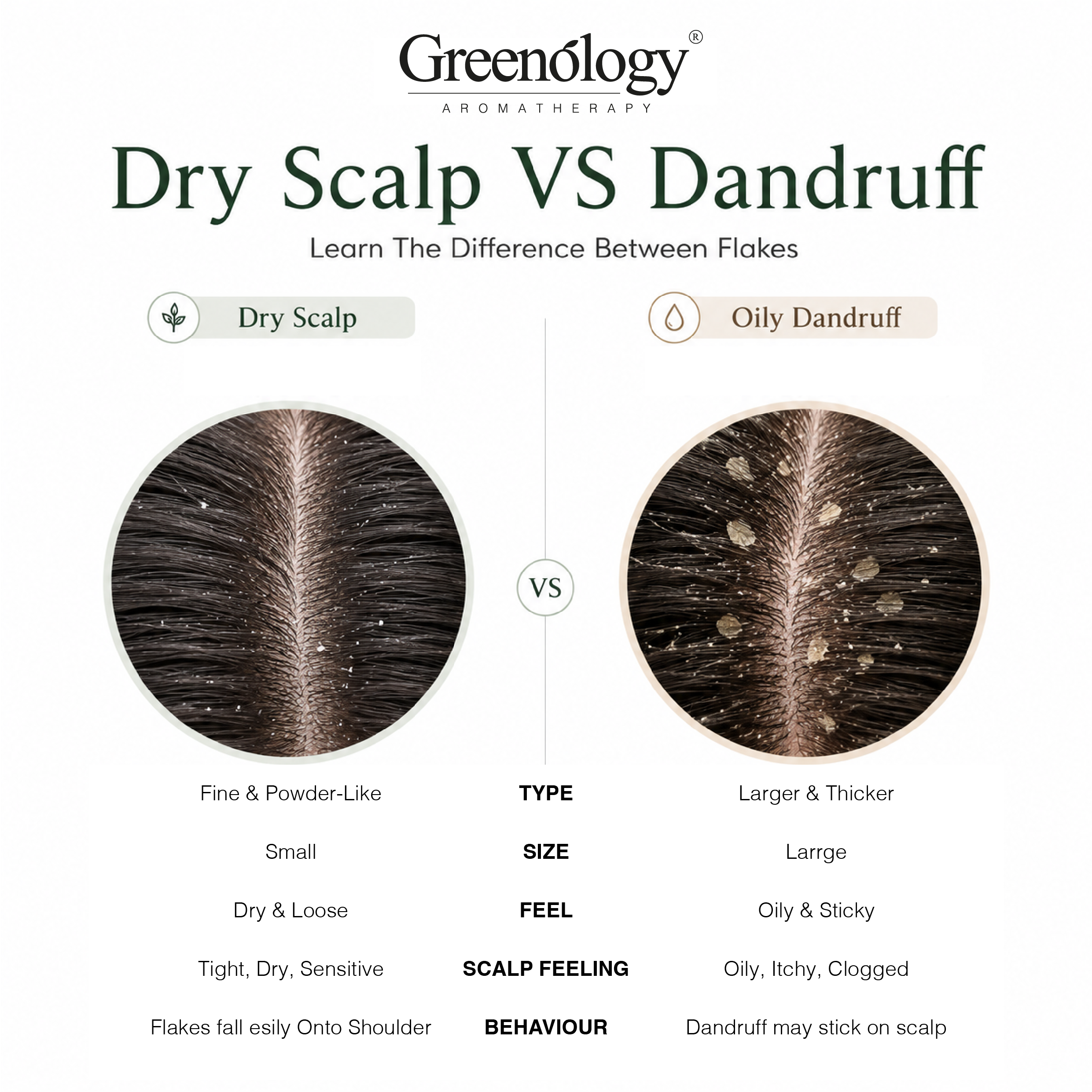
| Difference | Dry Scalp | Oily Dandruff |
|---|---|---|
Flake appearance |
Fine and powder-like |
Larger and thicker |
Flake colour |
White |
White or yellowish-white |
Flake texture |
Dry and loose |
Oily, sticky, or waxy |
Scalp feeling |
Tight, dry, sensitive |
Oily, itchy, clogged |
Where flakes appear |
Shoulder, hairline, parting |
Scalp, roots, shoulder |
Does it stick to scalp? |
Usually no |
Often yes |
Routine focus |
Hydrate and comfort scalp |
Balance oil and remove buildup gently |
How to Check Your Flakes at Home
Before choosing a scalp care routine, observe your flakes and scalp feeling.
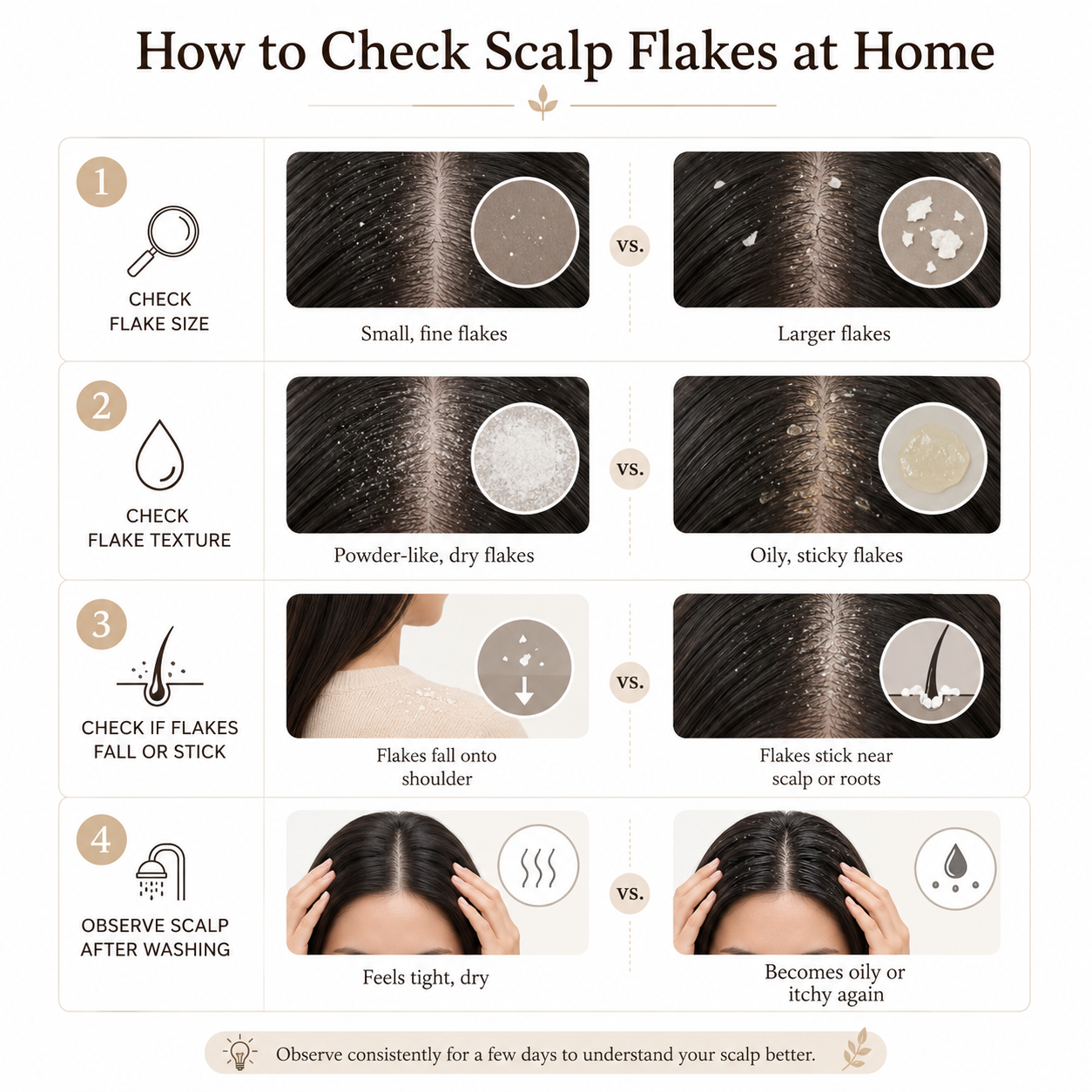
Step 1: Look at the flake size
If the flakes are small and powder-like, it may be dry scalp.
If the flakes are larger or patch-like, it may be oily dandruff.
Step 2: Check the flake texture
If the flakes feel dry and loose, your scalp may need more moisture and comfort.
If the flakes feel oily, sticky, or heavier, your scalp may need balancing care.
Step 3: Notice where the flakes appear
If the flakes fall easily onto your shoulder, it may be dry scalp.
If the flakes stick to your scalp or hair roots, it may be oily dandruff.
Step 4: Observe your scalp after washing
If your scalp feels tight after shampooing, it may be dry scalp.
If your scalp becomes oily or itchy a few hours after washing, it may be oily dandruff-prone scalp.
Can You Have Both Dry Scalp and Dandruff?
Answer Box:
Yes, some people may experience both dryness and dandruff-like flakes. For example, the scalp may be oily at the roots but dry or sensitive in certain areas. This is why it is important to observe both flake texture and scalp feeling.
Some people have combination scalp. The scalp may become oily quickly, but certain areas may still feel dry, tight, or flaky.
This can happen after:
- Frequent colouring
- Relaxing or chemical services
- Over-cleansing
- Product mismatch
- Weather changes
- Scalp barrier imbalance
In this case, avoid using overly strong products every day. A balanced routine is usually more suitable.
Greenology Routine for Dry Scalp
If your flakes are fine, white, powder-like, and your scalp feels tight or sensitive, focus on gentle moisture and scalp comfort.
Recommended routine
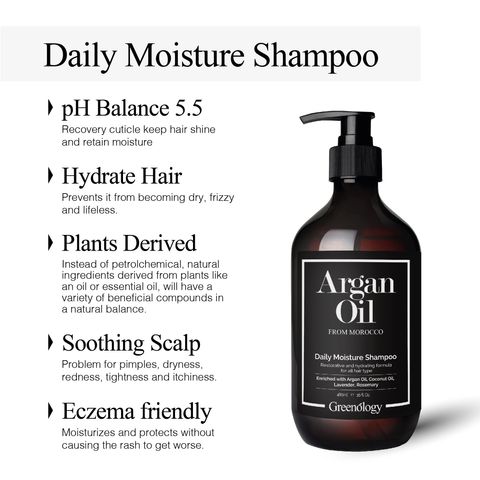
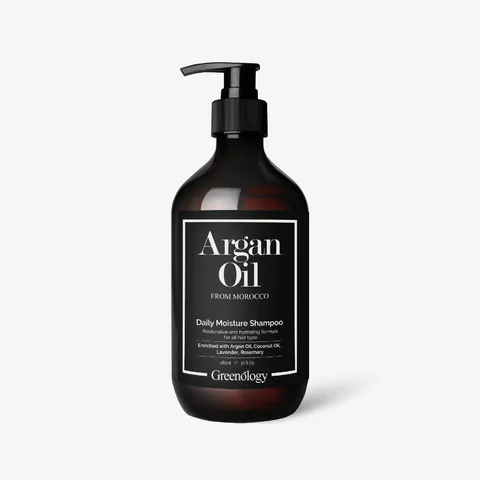
STEP 1 / Daily Moisture Shampoo
Cleanse the scalp gently
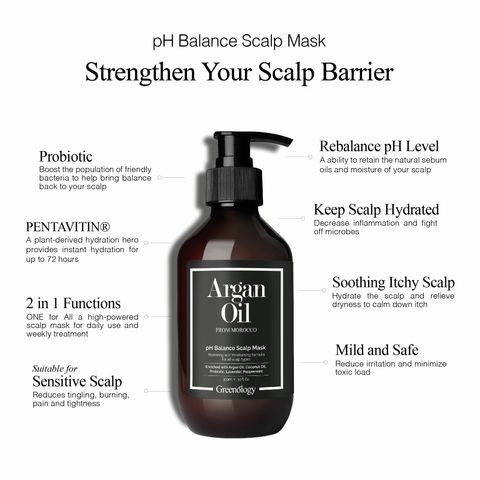
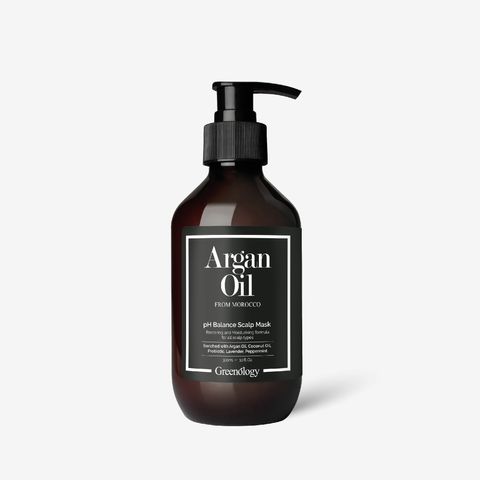
STEP 2 / pH Balance Scalp Mask
Apply directly on scalp, leave for 5-10 minutes, then rinse
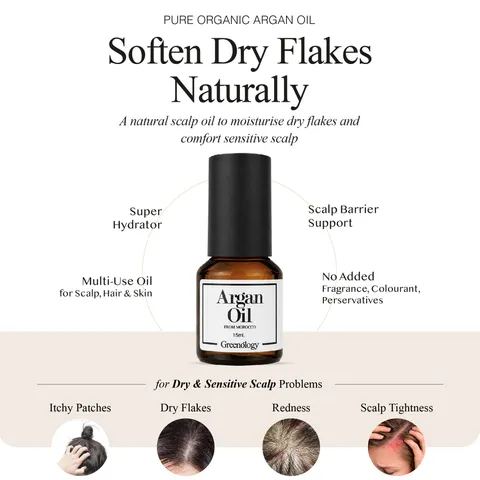
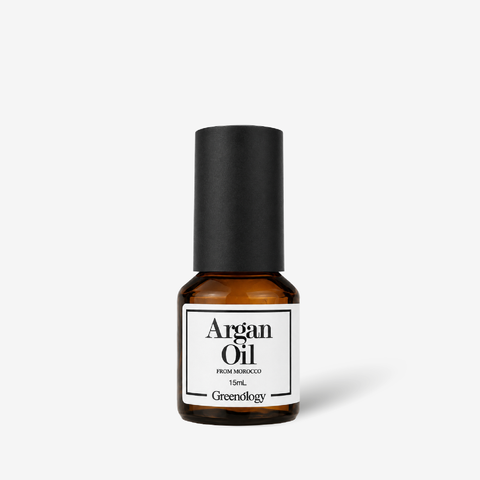
STEP 3 / Pure Argan Oil
Apply a small amount only on very dry areas after washing.
Avoid very hot water, over-washing, and strong cleansing products if your scalp already feels dry or tight.
Greenology Routine for Oily Dandruff
If your flakes are larger, oily, yellowish-white, or stuck to the scalp, focus on balancing oil and reducing scalp buildup gently.
Recommended routine
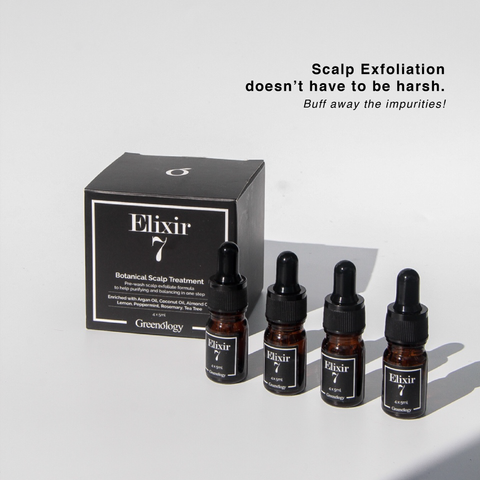
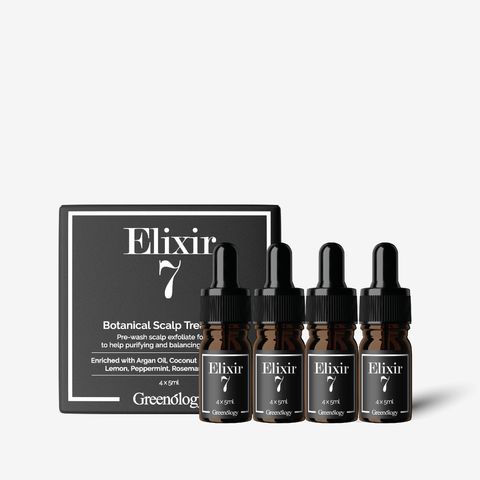
STEP 1 / Elixir 7 Botanical Scalp Treatment
Use before shampoo once weekly
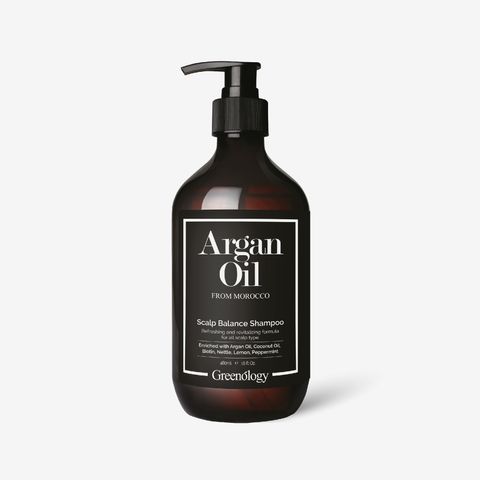
STEP 2 / Scalp Balance Shampoo
Cleanse the scalp thoroughly
STEP 3 / pH Balance Scalp Mask
Apply directly on scalp, leave for 5-10 minutes, then rinse
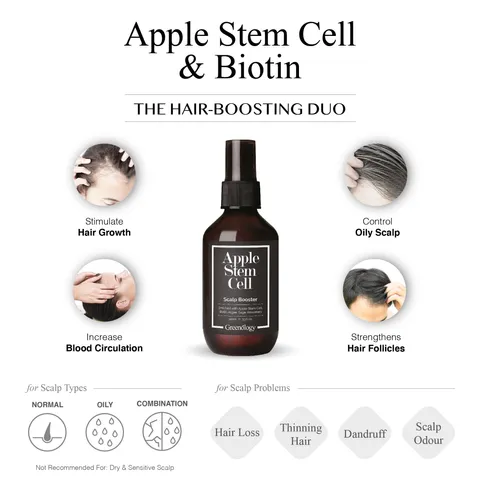
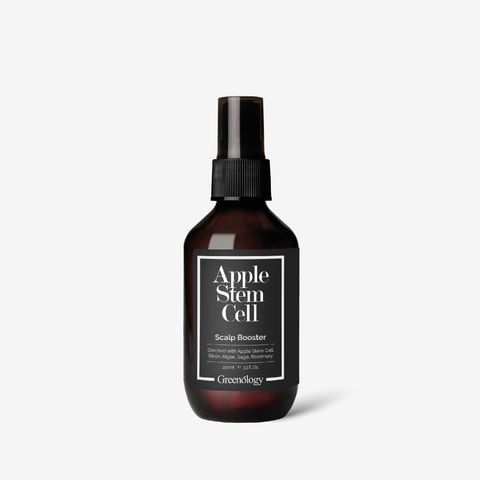
STEP 4 / Apple Stem Cell Scalp Booster (Optional)
Use if oily scalp also has hair fall concern
Avoid applying heavy oils or hair conditioner directly onto an oily scalp, as this may make the scalp feel heavier.
What Not to Do When You Have Flaky Scalp
Avoid these common mistakes:
- Scratching aggressively
- Washing with very hot water
- Over-washing with harsh shampoo
- Applying conditioner directly onto oily scalp
- Using heavy oil all over oily scalp
- Assuming all flakes are dry scalp
- Using strong scalp treatments every day
If your scalp is painful, red, swollen, bleeding, or the flakes are very thick and persistent, it is best to check with a dermatologist or healthcare professional.
FAQ: Dry Scalp vs Dandruff
1. Is dandruff the same as dry scalp?
No. Dry scalp and dandruff can both cause flakes, but they are not the same. Dry scalp usually creates fine, powder-like flakes, while dandruff is usually larger, oilier, and may stick to the scalp.
2. How do I know if my flakes are dry scalp or dandruff?
Look at the flakes. Dry scalp flakes are usually small, white, dry, and powder-like. Dandruff flakes are usually larger, thicker, oily, or yellowish-white, and may stick to the scalp or hair roots.
3. Can oily scalp have dandruff?
Yes. Dandruff is often associated with oily scalp, scalp buildup, and scalp imbalance. If your scalp becomes oily quickly and the flakes are larger or sticky, it may be oily dandruff.
4. Why do I have flakes on my shoulder?
Flakes may fall onto the shoulder when they are loose. Fine, powder-like flakes are commonly seen with dry scalp. Larger dandruff flakes may also fall, but they often stick more to the scalp or hair roots.
5. Should I use oil if I have dandruff?
If your scalp is oily and dandruff-prone, avoid applying heavy oil all over the scalp. It may make the scalp feel heavier. If only certain areas are dry, use a small amount only on those dry areas.
6. Which Greenology shampoo should I use for DRY scalp?
For dry, tight, or sensitive scalp, Daily Moisture Shampoo is usually a more suitable option. It can be paired with pH Balance Scalp Mask for extra scalp comfort.
7. Which Greenology shampoo should I use for OILY dandruff?
For oily, itchy, or dandruff-prone scalp, Scalp Balance Shampoo is usually more suitable. It can be paired with pH Balance Scalp Mask and Elixir 7 as a weekly pre-shampoo scalp treatment.
8. When should I see a dermatologist?
If your scalp is painful, red, swollen, bleeding, or flakes are very thick and do not improve, it is best to seek advice from a dermatologist or healthcare professional.
Final Takeaway
The easiest way to tell dry scalp and dandruff apart is by looking at the flakes.
Dry scalp flakes are usually fine, white, powder-like, dry, and loose.
They may fall easily onto the shoulder and often come with tightness or sensitivity.
Oily dandruff flakes are usually larger, thicker, oily, or yellowish-white.
They may stick to the scalp or hair roots and often come with oiliness, itchiness, or buildup.
Once you understand your flake type, you can choose a scalp care routine that better supports your scalp condition.
Related Articles:
Scalp Treatment Guide: Benefits, Types & How to Choose